



CEREBRA
Preserving Human Dignity through Proactive AI Diagnostics
Early detection of cognitive decline using multimodal biomarkers — voice, retina, and behavior — powered by clinical-grade artificial intelligence.
Our Story
A System in Need of Change
Every 3 seconds, a new life is changed by a dementia diagnosis. By 2030, the global economic burden is projected to reach $2.8 billion.
In Germany alone, we face some of the highest incidence and mortality rates in recent comparisons.
The Misconception
Despite these numbers, 80% of the population still believe dementia is simply a "normal part of aging." This misconception leads to fragmented care, delayed interventions, and a misallocation of resources.
Our Mission at Cerebra
At Cerebra, we believe that dementia is not destiny. Early detection and proactive management are the keys to preserving human dignity.
Cerebra was founded at the OTH Amberg-Weiden to bridge the gap between high-end clinical research and daily care. We are building the AI Care Link to ensure that no one is left alone in the fight against neurodegeneration. By shifting from reactive crisis management to proactive care, we empower patients, families, and medical professionals to act long before symptoms define a life.
We are driven by the principle of Participatory Empowerment. We don’t just build tools; we build an Ecosystem of Stakeholders. By connecting patients, caregivers, and doctors through a digital memory link, we ensure that every insight leads to better care.
Our mission is clear: To preserve human dignity and establish a new standard of care through the power of Compassionate AI.
We exist at the intersection of human dignity and machine intelligence. We detect what others miss, earlier than anyone has before — not because it is profitable, but because 57 million lives and the families around them demand it. We will never confuse technological sophistication with actual impact.
Strategic Excellence:
Navigating with Radical Clarity
To transform a system that impacts millions, good intentions are not enough—it requires a leadership culture that prioritizes humanity over ego and a strategy rooted in uncompromising focus. At Cerebra, we navigate by two core principles that ensure our technology serves its ultimate purpose: preserving human dignity.
The Hedgehog Concept: Our Trinity of Success
The Hedgehog Concept, which forms the basis of our strategy, was originally developed by Jim Collins. We do not believe in aimless action. Our strategy is built on the Hedgehog Concept, the intersection of three fundamental questions that define our "North Star":
What is our passion? To protect human dignity through Compassionate AI.
What can we be the best in the world at? Building the AI Care Link—a multimodal engine that detects the invisible long before it becomes irreversible.
What drives our economic engine? An ecosystem that creates real value for the "Triplett"—patients, caregivers, and clinicians—by shifting care from reactive crisis management to proactive prevention.
Level 5 Leadership:
Responsibility and Foundational Principle
Changing a global standard of care demands a rare kind of leadership. Drawing on Level 5 Leadership from Jim Collins’s Good to Great, we cultivate a culture grounded in professional will and personal humility. We do not pursue visibility for the sake of technological spectacle. Instead, we accept full accountability for results, directing ambition away from personal recognition and toward one unwavering mission: ensuring that no one is left alone in the fight against neurodegeneration.
Our vision is not an abstract aspiration, but a disciplined and deliberately guided process. We are not merely creating software – we are building the institution capable of making this “silent fate” finally understandable, treatable, and preventable.
Technology
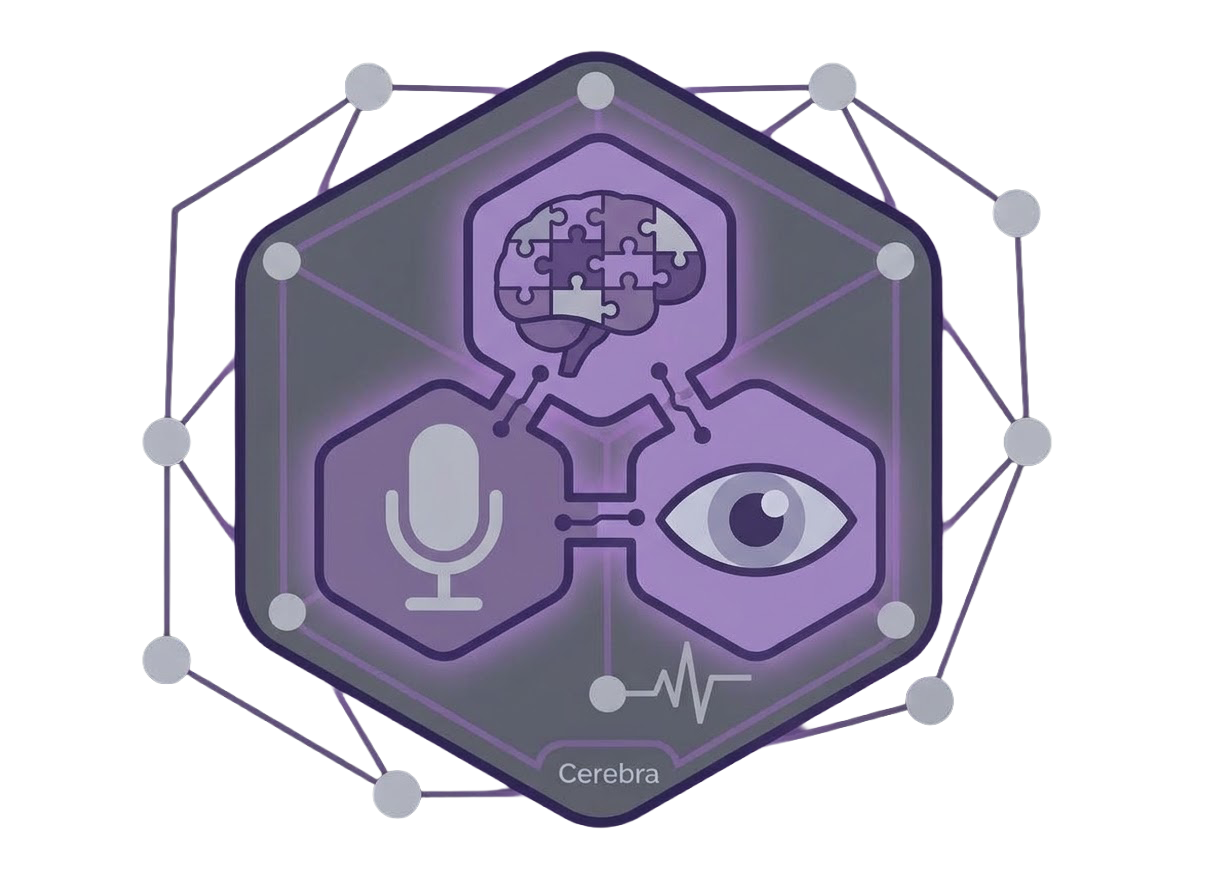
The Cerebra technology platform acts as a multimodal architecture, designed to transform dementia care from reactive crisis intervention into proactive, predictive support. By integrating digital innovation with human compassion, we provide a sustainable ecosystem for patients, families, and healthcare professionals.
Key Technological Pillars:
Interactive Cognitive Engagement: The app features clinically proven therapeutic activities based on validated models such as MMSE and MoCA. These are not just games, but tools for cognitive stimulation that capture continuous, high-precision data on performance and fine motor skills.
AI-Supported Personalization: To ensure sustained engagement and prevent frustration, the engine utilizes AI-supported difficulty adjustment tailored to each user’s specific needs.
The AI Care Link (Central Hub): Our interface serves as a central hub, securely connecting the entire care team. It translates complex data into actionable, AI-supported insights and clear warnings regarding risk and disease progression for physicians.
Automated Care Documentation: The platform significantly reduces administrative effort by automating the care diary required for official assessments of care levels.
The Goal: To enable a longer, independent life at home and preserve human dignity through transparency, shared empowerment, and early intervention.
The Triad
Cerebra is more than a tool; it is a connected ecosystem. We bridge the gap between stakeholders through our AI Care Link, ensuring that information flows where it is needed most.
For Patients: Through early detection and cognitive engagement, patients can maintain their autonomy and dignity for longer, staying active participants in their own lives.
For Caregivers: By providing actionable data and automating routine documentation, we reduce uncertainty and emotional stress for families and nursing staff.
For Medical Professionals: Our AI translates complex biological markers into clear, clinical insights, supporting doctors in making precise diagnostic decisions years earlier than traditional methods.
Science, Research, Trust
Large-Scale Meta-Science:
Cerebra is built upon a synthesis of global dementia research. By utilizing unsupervised machine learning to analyze 300,021 peer-reviewed scientific publications ranging from 1959 to 2025, we have identified the critical gap in current healthcare: a systemic misallocation of resources toward late-stage intervention.
The Reallocation Framework:
Our core scientific strategy, the "Reallocation Framework," advocates for a transition from reactive crisis management to proactive, predictive care.
Validation of Multimodal Biomarkers:
The Cerebra engine integrates diverse biological and behavioral data streams, each validated by clinical standards:
Neuro-Vocal Biomarkers: Our research leverages voice as a neurological mirror. By analyzing acoustic and linguistic patterns, the system achieves a 94.2% sensitivity and 89.3% diagnostic accuracy in identifying early cognitive decline.
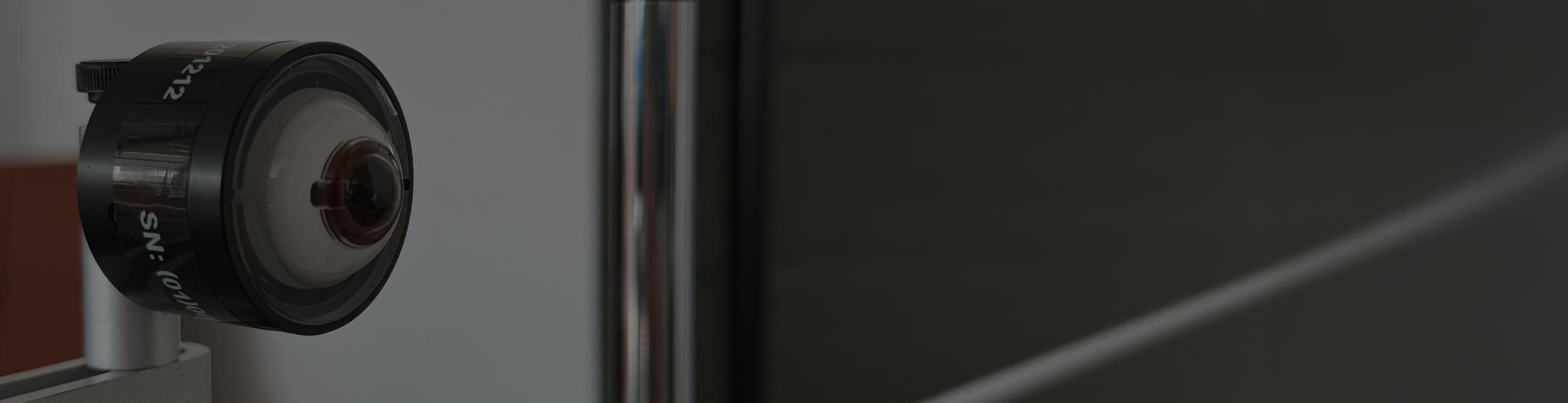
Ocular Mapping: Evidence confirms that retinal amyloid (Aß) deposits correlate with brain pathology and can appear 15 to 20 years before cognitive symptoms. CEREBRA integrates hyperspectral retinal data for non-invasive, ultra-early screening.
Digital Phenotyping & Motor Dynamics: Continuous monitoring of fine motor skills and cognitive reaction speeds (mapped against MMSE and MoCA scales) provides a high-fidelity digital phenotype of the user’s neurological state.
Cerebra integrates decades of dementia research with advanced computational analysis to bridge gaps in healthcare. Our studies combine multi-modal approaches, like voice and neuroimaging biomarkers, with systems-based frameworks to improve early detection and resource allocation. Key works include Kamran and Baretto (2026a, 2026b, 2026c), highlighting AI-driven training, systems theory applications, and meta-science analyses that guide proactive, predictive, and scalable care strategies.
References:
Kamran, Q. & Baretto, P., 2026a. Computational Synthesis of Dementia Research for AI-Driven Training: A Convergence Framework Integrating Voice and Neuroimaging Biomarkers for Holistic Care in Higher Education. Springer International Publishing, Artificial Intelligence in Higher Education. ISBN: 978-3-032-19554-8.
Kamran, Q. & Baretto, P., 2026b. Fathoming Ashby’s Law of Requisite Variety: Disambiguating Quantum Information Theory Through a Management Cybernetics Lens. Springer International Publishing, Artificial Intelligence in Higher Education.
ISBN: 978-3-032-19554-8.Kamran, Q. & Baretto, P., 2026c. Computational Meta-Science Analysis of Dementia Research: Systematic Resource Misallocation and Strategic Reallocation Frameworks. Springer, Entrepreneurship and Innovation.
ISBN: 978-3-032-20996-2.Kamran, Q. & Baretto, P., 2026d. The XR Paradox in Dementia Care: A 64 Year Bibliometric Analysis Reveals Investment-Impact Misalignment across 2,801 Immersive Technology Articles. International XR-Metaverse Conference 2026, Tallinn, Estonia, June 2026. To be published.
Kamran, Q. & Baretto, P., 2026e. Mapping the Future of Dementia Neuroimaging: Machine Learning Identifies Three Urgent Priorities for Multimodal Diagnostic Integration. European Society of Radiology (ECR) 2026, Vienna, March 2026. To be published.
Kamran, Q. & Baretto, P., 2026f. Cognitive Vulnerability as Security Foundation: A Convergent Framework for Trustworthy AI-Enabled Metaverse Architectures. International XR-Metaverse Conference 2026, Tallinn, Estonia, June 2026. To be published.